If you suspect you have signs of sleep apnea, give our office a call at 817-623-9699. We will help you get the correct testing and treatment if necessary!
Of those affected by Obstructed Sleep Apnea, about 90% are undiagnosed. Dentist are well positioned to identify those at risk due to the physical signs in the oral cavity and are encouraged to screen patients by the American Dental Association.
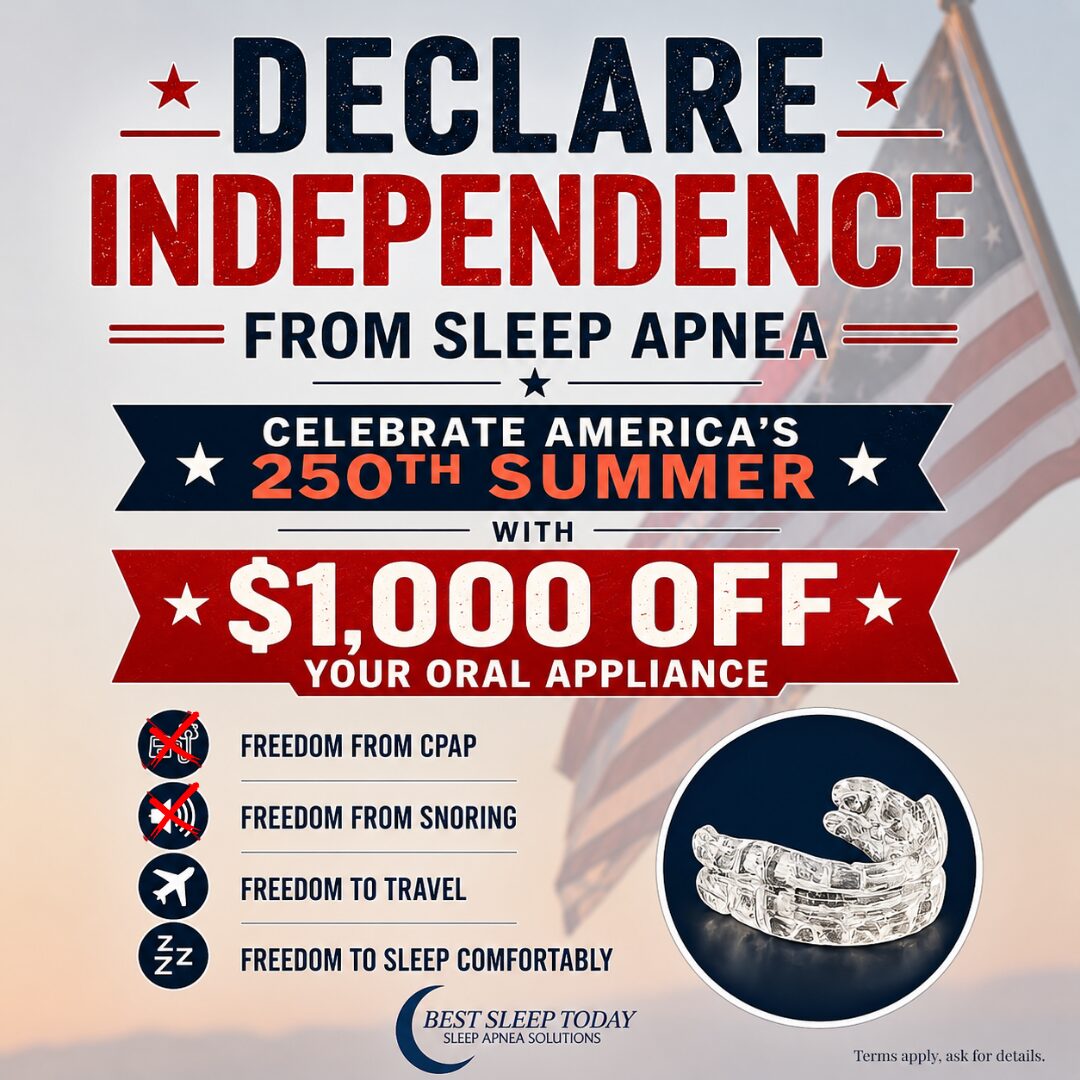
Patients who cannot tolerate CPAP machines or have not had success with OTC nightguards may benefit from a custom-fabricated oral appliance fitted by a dentist, pushing your lower jaw forward to prevent the blockage of your airway.
We are credentialed with most major insurance companies, including Medicare. Coverage varies with each plan, but oral appliances to treat sleep apnea are commonly covered by medical insurance polices. Our team is happy to talk through your specific case to find out what coverage may be available to you.
Yes, sleep apnea can seriously affect your health. If left untreated, even mild cases, can lead to high blood pressure, cardiovascular diseases, diabetes, Alzheimer’s, and more life -threatening conditions.
While the severity may differ, snoring is, at it’s most basic form, an obstruction of your airway. When your airway is obstructed, your brain and blood can be starved for oxygen.
It is completely normal to have questions or even temporary discomfort after beginning to wear your appliance nightly. We expect this to alleviate after about 30 days. You will have several follow-ups to ensure no adjustments need to be made to the appliance and to make certain the device is working effectively.
Yes — treatment works best when paired with healthy habits. Consider these complementary strategies:
Weight management: Even modest weight loss can reduce airway blockage and enhance the effectiveness of your appliance.
Sleep position: Sleeping on your side rather than your back often improves breathing — discuss positional aids if needed.
Limit alcohol and sedatives: These relax throat muscles and worsen airway collapse.
Avoid smoking: Smoking inflames airway tissues and increases risk of apnea.
Establish a regular sleep schedule: Consistent sleep helps maintain airway muscle tone and reduces fatigue.
By combining your appliance therapy with these lifestyle measures, you’ll give yourself the best chance of restful sleep and better overall health.
If your bed partner reports that you “stop breathing,” gasp, choke, or wake suddenly during sleep, these are strong signs of obstructive sleep apnea (OSA). Such episodes occur when your upper airway collapses during sleep, airflow stops, oxygen drops, your brain triggers a brief arousal to restart breathing — then the cycle repeats, often dozens or hundreds of times per night.
What you should do:
Don’t ignore it. Untreated OSA increases risk for hypertension, heart disease, stroke, diabetes and other serious health concerns.
Ask your physician for a referral for a sleep study.
Meanwhile avoid alcohol/together with sedatives at bedtime, sleep on your side, and maintain a healthy weight.
Call our office at Best Sleep Today to schedule a screening consultation — the sooner OSA is evaluated, the sooner effective treatment (such as an oral appliance) can restore your sleep and overall health.
Getting professional help now could make a big difference in your vitality, mood, cognitive performance and cardiovascular risk.