Sleep Apnea Treatment You Don’t Have to Second-Guess
It’s 11 p.m. You’re finally ready for bed, and then the questions start.
When did I last clean the CPAP hose? Is the mask supposed to smell like that? Am I overdue on the filter? Or, if you went the surgical route: Is this implant actually doing its job tonight? How would I even know?
Sleep apnea treatment is supposed to help you rest. At Best Sleep Today, we hear from patients all the time for whom it’s become one more thing to worry about.
It doesn’t have to be that way.
Why Treating Sleep Apnea Matters
Obstructive sleep apnea happens when the tissues in your throat relax during sleep and partially or fully block your airway. Your body briefly wakes itself up to breathe, sometimes dozens of times an hour, usually without you remembering it.
Over time, untreated sleep apnea is linked to daytime exhaustion, high blood pressure, heart problems, and more. So the real question isn’t whether to treat it. It’s how to treat it in a way you’ll actually stick with.
The Options, Honestly Compared
CPAP uses a machine to push a steady stream of air through a mask to keep your airway open. Worn every night, it’s highly effective, and for many people with severe sleep apnea it’s the right tool. But it asks a lot: a mask, a hose, a humidifier to fill, and regular cleaning of every part to keep bacteria and mold from building up. Many people find it hard to use consistently, and a CPAP in the closet doesn’t help anyone.
Implanted nerve stimulation is a surgical option for certain patients with moderate-to-severe sleep apnea who can’t tolerate CPAP. A small device stimulates the nerve that controls tongue movement to keep the airway open. It can work well for the right candidate, but it involves surgery, recovery time, and follow-up adjustments.
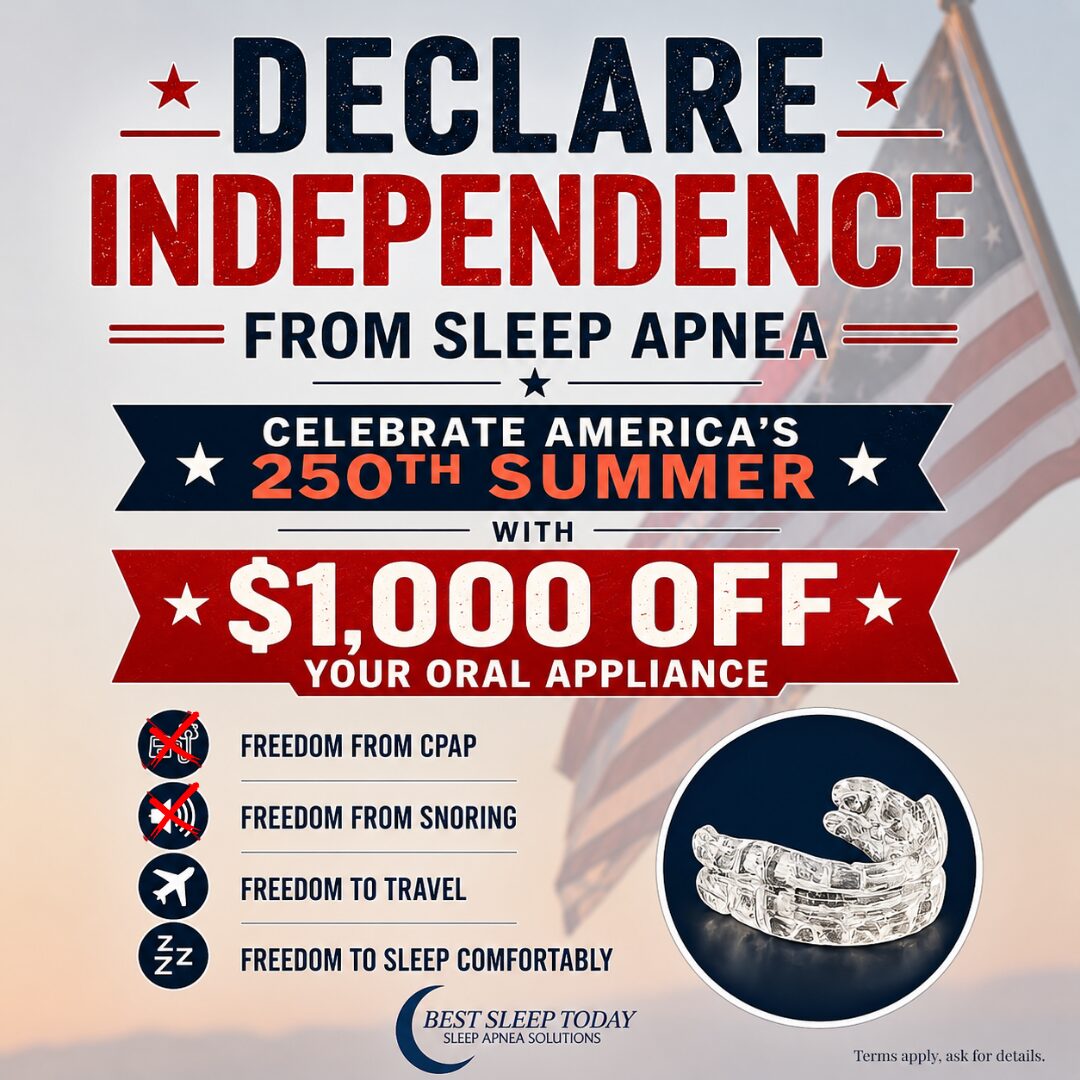
Oral appliance therapy, which is what we focus on at Best Sleep Today, uses a custom-made device, similar to a mouthguard, that gently holds your lower jaw slightly forward while you sleep. That small shift helps keep your airway open. No mask, no hose, no machine, no surgery.
For a deeper side-by-side look, see our full guide: CPAP vs. Oral Appliances.
Why So Many of Our Patients Choose an Oral Appliance
It fits in your life. It’s quiet, compact, and fits in a small case. No power cord, no distilled water, nothing humming next to your partner, and nothing bulky to pack when you travel.
Care is simple. A quick brush and rinse in the morning, and it goes back in its case. That’s it.
People actually wear it. The best treatment is the one you’ll use every night. Many patients find an oral appliance far easier to stay consistent with, and consistency is where results come from.
It’s recommended for the right patients. Oral appliance therapy is an established, clinically recognized treatment for mild to moderate obstructive sleep apnea, and for people with more severe apnea who can’t tolerate CPAP.
“But How Do I Know It’s Working?”
That’s a fair question, and you deserve a real answer, not guesswork.
At Best Sleep Today, your appliance is custom-fit and adjusted over several visits until it’s positioned right for you. Once it’s dialed in, a follow-up sleep test measures how well you’re breathing with the appliance in place. You get objective data, not a hunch. We also coordinate with your sleep physician, so your care stays connected from diagnosis all the way to results.
Haven’t been diagnosed yet? Testing is simpler than most people expect and doesn’t require an overnight stay in a sleep lab. Learn more about sleep apnea testing.
Common Questions
Is an oral appliance as effective as CPAP?
When CPAP is worn every night, it generally reduces apnea events more. But many people don’t wear CPAP consistently, and an oral appliance that’s worn nightly can deliver strong real-world results for mild to moderate sleep apnea.
How much maintenance does an oral appliance need?
Very little. Brush and rinse it each morning and store it in its case. There are no hoses, filters, or water chambers to clean or replace.
Can I get an oral appliance if I already have a CPAP?
Yes. Many of our patients come to us after struggling with CPAP. An existing sleep apnea diagnosis is often what’s needed to get started.
Will insurance cover oral appliance therapy?
Often, yes. Coverage varies by plan, and our team can walk you through yours during a consult.
Rest Should Feel Restful
Treating sleep apnea should give you peace of mind, not another nightly checklist. If you’ve been diagnosed with sleep apnea, struggle with CPAP, or just want to know whether an oral appliance could work for you, we’d love to talk.
Request a free Telesleep virtual consult from home, on your schedule, and find out if oral appliance therapy is the right fit for you. Prefer to talk it through with a person? Call or text our office, or request an appointment online.