It’s late. The house is quiet except for the hum of your machine, or maybe the hiss where the mask seal gave out again. Your spouse rolled over and elbowed you for the third time tonight. Or maybe there’s no machine at all — just you, wide awake, wondering if the snoring you’ve been ignoring for years is finally catching up with you.
However you landed here, you’re not the only one doing this search at this hour. We see it in our own scheduling data all the time: a wave of people looking up “CPAP alternatives” between 11pm and 6am, not during business hours. Middle-of-the-night searching isn’t a coincidence — it’s the moment the problem is loudest. So let’s use it well. Here’s what’s actually true, broken down for wherever you’re starting from tonight.
“I have a CPAP, and I can’t take the mask anymore”
If you’re reading this with a mask mark still on your face, you already know the honest CPAP truth nobody puts in the brochure: it works great, when you can actually stand to wear it. Studies on CPAP consistently show a real-world problem — a large share of patients stop using it regularly within the first year, usually because of mask discomfort, air pressure, noise, or feeling claustrophobic. If that’s you, the issue isn’t willpower. It’s the device.
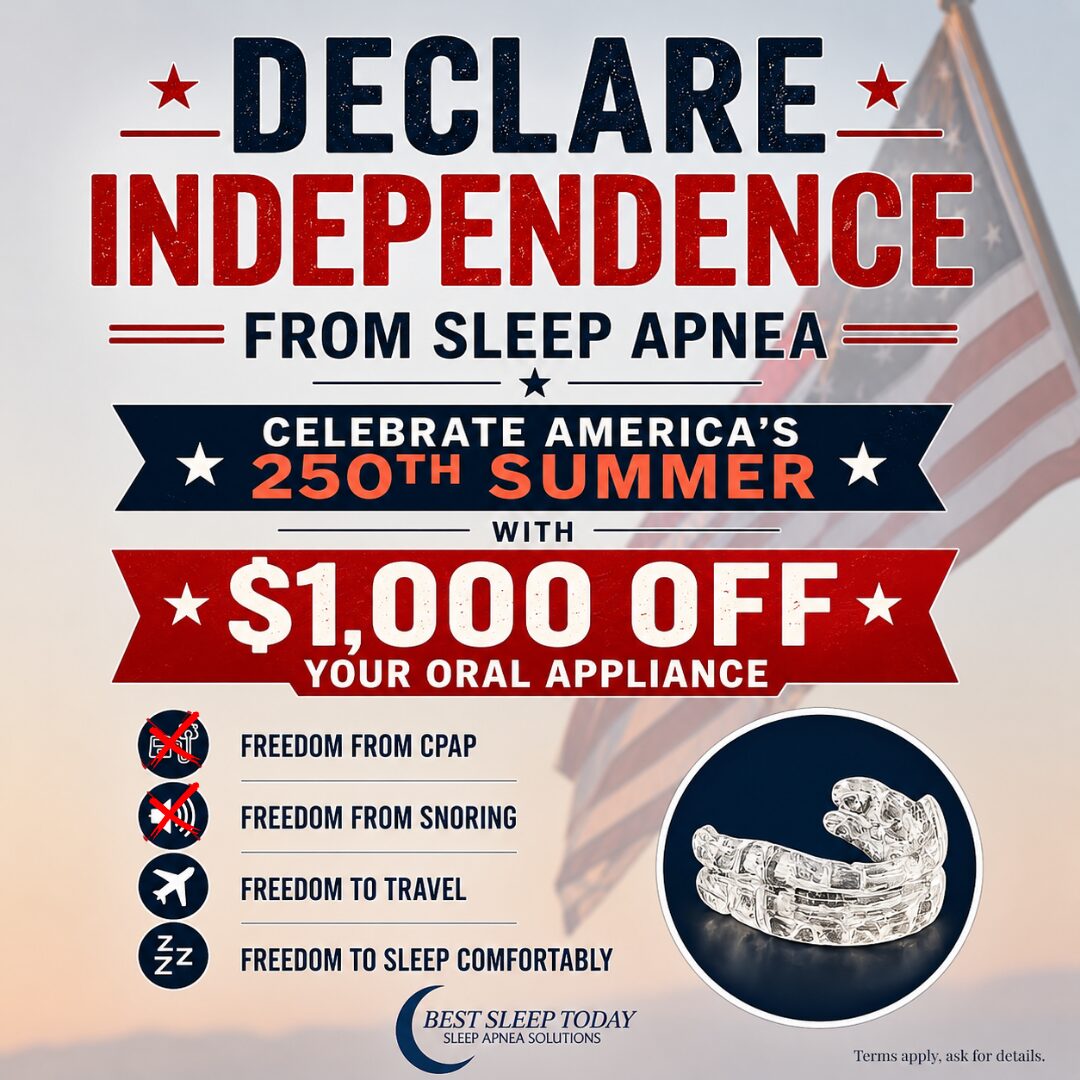
The good news is CPAP isn’t the only medically recognized treatment for obstructive sleep apnea. For many people with mild to moderate sleep apnea — and some with severe cases who can’t tolerate CPAP — a custom oral appliance is a proven alternative. It’s a small, custom-fit device you wear like a nightguard that gently repositions your jaw to keep your airway open. No mask, no hose, no machine noise, no extra bag to pack when you travel.
We put together a full breakdown of how oral appliances stack up against CPAP — effectiveness, comfort, and what the research actually shows — here: CPAP vs. Oral Appliances.
“I know I have sleep apnea, but CPAP or surgery scares me”
Maybe you were diagnosed a while back and just never started treatment. That’s more common than you’d think, and it’s not something to be embarrassed about. Between the idea of sleeping strapped to a machine and the idea of surgery, a lot of people quietly decide neither one is worth it — and then just live tired.
Here’s what’s worth knowing: oral appliance therapy sits between “do nothing” and “invasive procedure.” It’s non-surgical, reversible, and doesn’t require getting used to forced air. It’s also backed by the American Academy of Sleep Medicine as a legitimate first-line treatment option for many patients, not just a fallback for people who “couldn’t handle” CPAP.
If fear of the unknown is what’s kept you from doing anything about a diagnosis you already have, the next step doesn’t have to be scary or immediate. It can just be a conversation.
“I don’t even know if this is sleep apnea — I’m just exhausted, or I snore”
If you don’t have a diagnosis yet, late-night search sessions like this one are usually driven by one of two things: you’re tired in a way that regular tired doesn’t explain, or someone else in the house has told you — loudly, repeatedly — that your snoring is a problem.
Both are worth taking seriously. Loud, chronic snoring combined with daytime exhaustion, morning headaches, or waking up gasping are classic signs of obstructive sleep apnea, and it’s a lot more common than people realize. The only way to know for sure is testing, and it’s easier than most people expect — we offer testing that doesn’t require an overnight stay in a lab. You can read more here: Sleep Apnea Testing.
What to actually do right now (hint: not calling us at 2am)
Our office isn’t open right now, and that’s fine — this isn’t a “call immediately” situation. What you can do tonight is request a free virtual Telesleep consultation, on your own time, without getting out of bed or waiting for office hours: Request a Free Telesleep Consult. It’s a real conversation with our team about your specific situation, not a sales pitch, and it costs you nothing to find out what your options are.
If you’d rather see everything laid out first, start with the full comparison: CPAP vs. Oral Appliances.
A few quick answers, since it’s late and you probably have more questions than time
Are oral appliances actually as effective as CPAP? For mild to moderate obstructive sleep apnea, research shows oral appliances can be as effective as CPAP, largely because people actually wear them consistently. For severe sleep apnea, CPAP is still often the first recommendation, but an oral appliance may be an option if CPAP truly isn’t tolerable — that’s a conversation for a sleep specialist, not a Google search.
Will my insurance or Medicare cover an oral appliance? Often, yes — oral appliance therapy is frequently covered similarly to other sleep apnea treatments. Coverage details vary, which is exactly what a consult is for.
Do I need a new sleep study if I already have a CPAP diagnosis? Not always. If you’ve already been diagnosed with sleep apnea, that existing diagnosis is often all that’s needed to evaluate you for an oral appliance.
What if I’ve never been tested and just suspect I have sleep apnea? That’s a normal place to start. Testing is straightforward and can usually be done without an overnight sleep lab stay.
If it’s the middle of the night and you’re reading this, we get it — and we’d genuinely rather you take five minutes to request a free virtual consult than lie there another night wondering. Request your free Telesleep visit or explore CPAP alternatives whenever you’re ready.